
The Initial Challenge: Outdated Training in a Hands-on Field
The Plumbing-Heating-Cooling Contractors Association (PHCC) faced a significant challenge with their apprenticeship program. While apprentices were motivated to advance in their careers and worked enthusiastically alongside master plumbers in the field, they described the required online training component as "incredibly boring," "a grind," and "not fun." This disconnect between engaging hands-on work and tedious online learning created a barrier to program completion and knowledge retention.
Technical Content vs. Learner Engagement
The existing self-paced correspondence course failed to leverage modern learning principles or technology. As with many technical programs, the issue was not content complexity but a lack of learner-centered design and online training engagement. Technical content about plumbing systems, mathematics, and electrical concepts was presented without consideration for engagement strategies. This resulted in low motivation despite strong career aspirations among apprentices. The program needed to maintain rigorous technical standards while dramatically improving the learning experience.
The Strategic Learning Design Process
Visualizing the Learning Environment
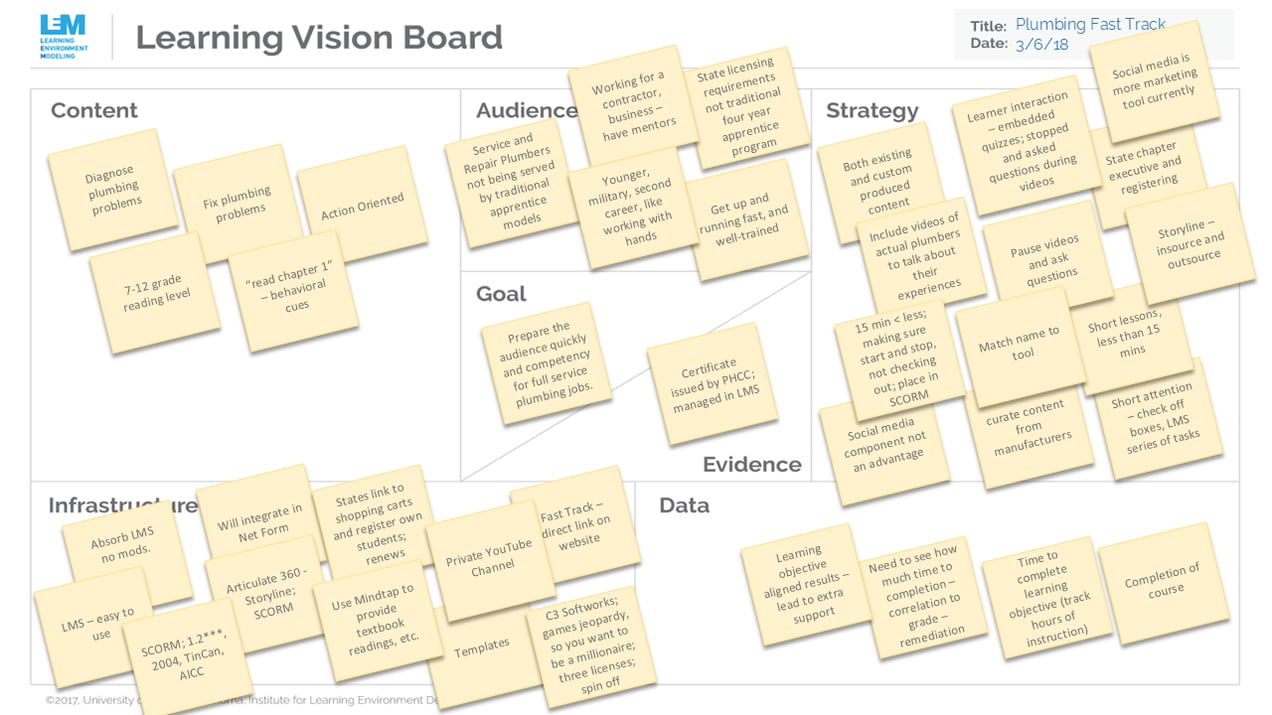
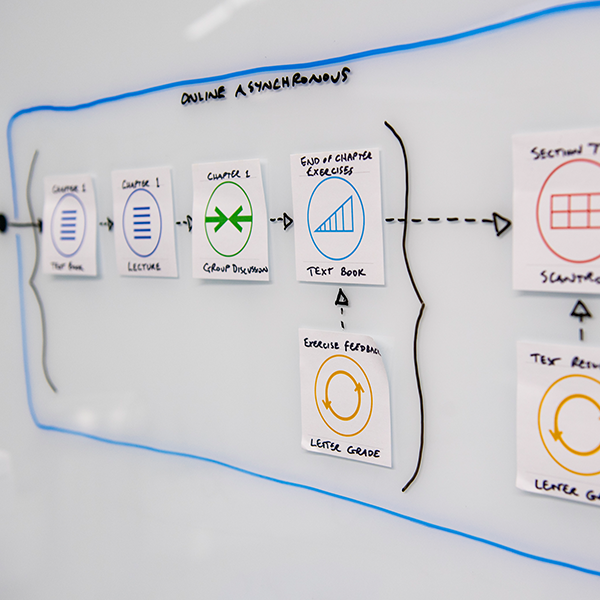
LX Studio applied its proprietary Learning Environment Modeling™ (LEM) approach—a proven framework for learning design for technical training— to create a visual "blueprint" for transforming PHCC's program. Beginning with a Learning Vision Board that served as an "overarching strategy compass," the team developed learner personas based on interviews with real apprentices. These visual tools enabled PHCC stakeholders to see and participate in redesigning their training program, rather than simply reading about proposed changes.
Human-Centered Design Through Learner Interviews
By interviewing apprentices at various stages of the program, LX Studio uncovered critical insights about learner motivations and pain points. The team discovered that while apprentices were excited about advancing in the plumbing trade, the online learning component was a demotivating factor. This research directly informed the development of engaging content strategies and learning patterns tailored to these technical learners.
.png?width=1357&height=844&name=Theory%20meets%20practice%20image%20(2).png)
Innovative Design Solutions
Humor as a Learning Strategy
One of the most distinctive elements of the redesign was the strategic use of humor throughout the curriculum. Every module received a creative title that made technical content approachable: "This Is Not a Drill!" for Tools, "Resistance Is Not Futile" for Ohm's Law, and "Always Use Protection!" for Circuit Protection. Interactive elements like "John Tra-voltage" demonstrated electrical concepts with memorable humor, transforming abstract technical content into engaging learning experiences.
Learning Design Patterns for Consistent Quality
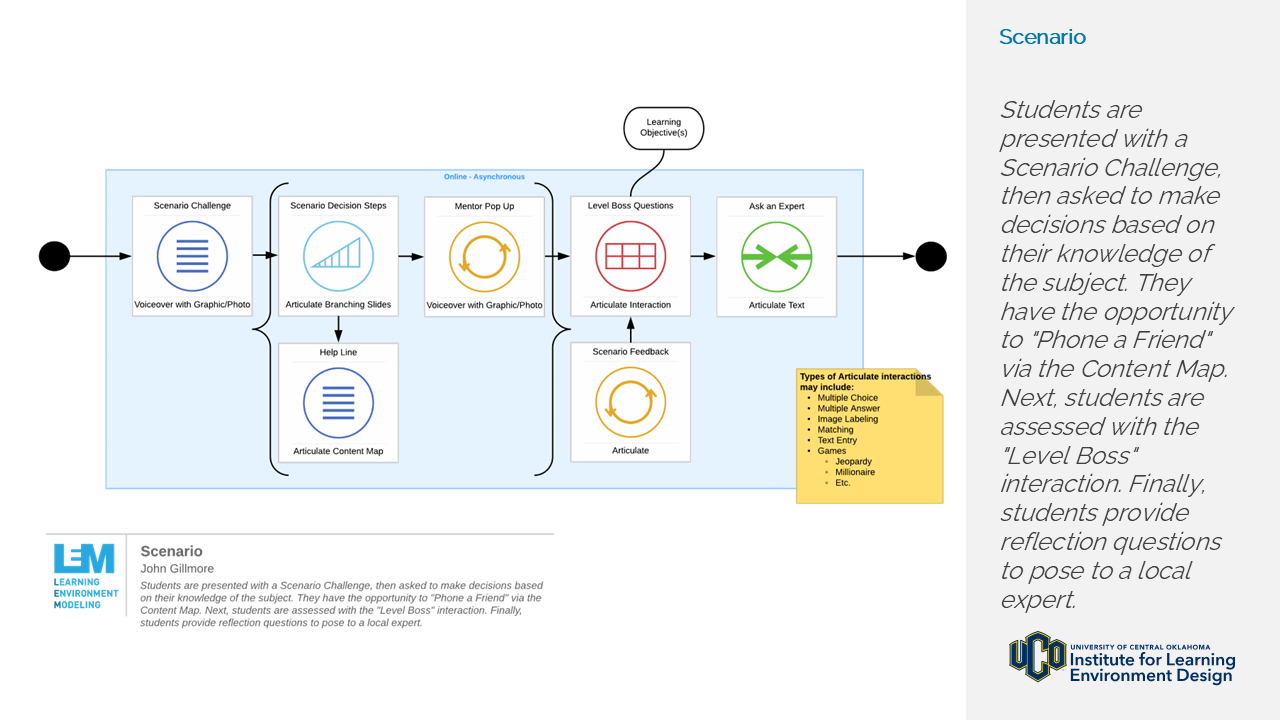
The team developed four core learning design patterns that served as templates for consistent quality across all modules, creating a scalable model for trade education learning design:
- Content Check
- Scenario
- Simulation
- Skill Up
These patterns were mapped to specific content based on learning objectives, creating a framework that transformed the overwhelming task of rebuilding an entire curriculum into logical, manageable components. For PHCC's internal team, this approach provided a clear "recipe" with "ingredients" they could use to build out their offering in the LMS.
Implementation and Technology Integration
From Blueprint to Digital Reality
The comprehensive Master Plan Portfolio delivered to PHCC included detailed wireframes that demonstrated how each design pattern would function within the Absorb LMS environment. By integrating publisher content (Cengage MindTap) with custom-designed interactive elements and assessments created in Articulate 360, the program maintained technical rigor while dramatically improving the user experience.
Breaking Down a Marathon Project
The sheer magnitude of transforming the entire plumbing apprenticeship curriculum presented a significant challenge. LX Studio's methodology transformed what would have been a "massive, nebulous project" into "manageable sprints" with clear deliverables. This approach made implementation feasible and sustainable for PHCC's internal team.
Outcomes and Impact
A Model for Trade Education
The PHCC Plumbing Fast Track project became a "textbook model" for learning design in technical trade education. The success of the approach was evident when PHCC re-engaged LX Studio to apply the same methodology to their HVAC apprenticeship program, specifically requesting the same humor-infused approach that had proven effective with plumbing apprentices.
Client Validation and Memorable Elements
The client's appreciation for the creative approach was clear in their feedback about favorite module titles. The men at PHCC particularly enjoyed "This is Not a Drill" for the Tools module, while the women highlighted "I'm Like Your Cool Aunt" for the coolant module—demonstrating how these creative elements resonated across the organization.
Lessons for Associations and Training Providers
Balancing Technical Rigor with Learner Engagement
The PHCC project demonstrates how even highly technical, specialized content can be transformed through strategic learning design. It offers a practical example of apprenticeship training modernization in action. By maintaining rigorous technical standards while introducing engagement strategies like humor, clear visual organization, and interactive elements, trade and professional associations can dramatically improve learning outcomes.
The Power of Visual Learning Design
Learning Environment Modeling proved to be a powerful tool for engaging stakeholders and systematizing the design process. By creating visual representations of the learning strategy, PHCC leadership could easily participate in design decisions and understand how individual components fit into the larger educational experience.
Actionable Takeaway
Start any curriculum overhaul by mapping the full learner experience visually—this surfaces engagement gaps long before development begins.
This project exemplifies how innovative learning design can transform traditional training programs, creating engaging pathways to technical expertise that respect both the seriousness of the subject matter and the human needs of learners. By bridging theory and practice through strategic design, LX Studio helped PHCC create a program that matched the excitement apprentices felt in the field with equally engaging online learning.
If your organization is exploring how to modernize technical training, LX Studio offers visual design tools and strategic consulting to guide your team through the process. Subscribe to our blog for practical frameworks, real examples, and ways to apply learning science in your workplace.
.jpg)

.png)